
Introduction
Most beginners think that Forex trading is about finding the right strategy. They spend months searching for the perfect system. They buy expensive courses. They watch hundreds of YouTube videos. But after all that, they still lose money.
Why does this happen?
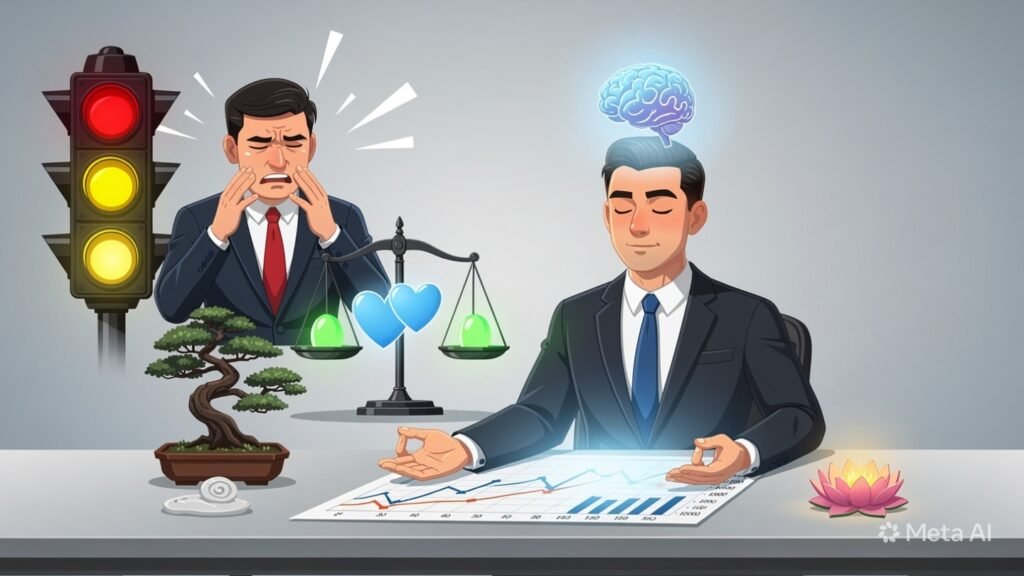
Because trading is not really about strategy. Trading is about emotions. You can have the best strategy in the world. If you cannot control your fear and greed, you will lose money.
I have seen this happen so many times. A beginner learns a good strategy. They practice on demo and make profit. Then they switch to a real account. Suddenly, they cannot follow their own rules. They get scared. They get greedy. They make bad decisions. And they lose money.
In this article, I will teach you how to control your emotions when trading. This might be the most important article you ever read about Forex.
Why Emotions Are Dangerous in Trading
Let me explain why emotions hurt your trading.
When you are scared, you close winning trades too early. The price goes up 10 pips in your favor. You get afraid that it will turn around. So you close the trade. Then the price goes up 100 pips without you. You left money on the table.
When you are greedy, you hold losing trades too long. The price goes against you. Your strategy says to close the trade at 20 pips loss. But you think, “It will come back.” So you hold. The price keeps going against you. Now you are down 100 pips. You lose much more than you planned.
When you are angry, you revenge trade. You lose $20 on a trade. You get angry. You open another trade immediately to win back the $20. That trade loses too. Now you are down $40. You get angrier. You open another trade. This is a disaster.
When you are overconfident, you take too much risk. You win three trades in a row. You feel like you cannot lose. So you make your next trade twice as big. Then that trade loses. Now you lost everything you won before.
Do you see the pattern? Emotions destroy traders. Not bad strategies. Not the market. Emotions.
The Most Dangerous Emotions for Traders
Let me list the four emotions that cause the most problems. Recognize them. They will show up in your trading.
Fear
Fear makes you hesitate. You see a good trade setup. But you are afraid to enter. By the time you finally enter, the price has already moved. You get a worse price. Or you miss the trade completely. Fear also makes you close winners too early.
Greed
Greed makes you chase profits. You see the price going up fast. You want to get in even though your strategy says wait. You buy at a bad price. Then the price turns around and you lose. Greed also makes you trade too large.
Anger
Anger comes after a loss. You feel like the market cheated you. You want to get back at the market. So you take bad trades. You ignore your rules. Anger is one of the fastest ways to blow up your account.
Overconfidence
Overconfidence comes after a win. You think you have figured everything out. You stop being careful. You stop using stop-losses. You trade larger sizes. Then the market humbles you with a big loss.
How Fear Destroys Your Trading – A Real Story
Let me tell you a story that happens to beginners every day.
Sarah learned a simple breakout strategy. She practiced on demo for one month. She made 300 pips. She felt ready. She deposited $200 into a real account.
Her first real trade came. The setup was perfect. Support broke down. She was supposed to sell. But she got scared. “What if I lose real money?” She hesitated. She did not enter. The price dropped 80 pips without her.
She felt terrible. She missed profit because of fear.
The next day, another setup came. This time she did not hesitate. She entered the trade. The price moved 10 pips in her favor. Fear came back. “What if it turns around and I lose?” She closed the trade. She made $1. The price then dropped another 60 pips.
Do you see how fear cost Sarah money? She did everything right on demo. But real money changed her feelings. That is why emotional control is so important.
How Greed Destroys Your Trading
Now let me tell you about Mike. Mike had a different problem. He was not scared. He was greedy.
Mike won his first three trades. He made $50 from a $200 account. He felt amazing. He thought he was a natural trader.
His fourth trade came. His strategy said to risk $4 on this trade. But Mike thought, “I have been winning. I can risk more.” He risked $20 instead. He traded a larger lot size.
The trade lost. Mike lost $20. That was more than his previous three wins combined. Now he was angry. And he was down overall.
Greed made Mike break his own risk rule. One bad trade wiped out three good trades.
Signs That Emotions Are Taking Over
You need to notice when emotions are controlling you. Here are the warning signs.
- You check your phone every two minutes to see your trade
- You cannot sleep because you are thinking about an open trade
- You close a trade and immediately want to open another one
- You feel sick to your stomach when price moves against you
- You feel like a genius when price moves in your favor
- You keep moving your stop-loss further away
- You add more money to a losing trade to “average down”
- You trade larger sizes after a win
- You trade right after a loss to win back money
If any of these sound familiar, your emotions are driving. You need to stop and take a break.
How to Control Fear – Practical Tips
Here are real tips that help control fear.
Tip one – trade smaller sizes
Most fear comes from risking too much money. If you are scared, your lot size is too big. Reduce it. Trade micro lots or even nano lots. When the money on the line is small, fear goes down.
Tip two – use a stop-loss every time
Fear comes from not knowing how much you can lose. A stop-loss takes away that unknown. You know exactly how much you will lose if the trade goes wrong. That knowledge reduces fear.
Tip three – close your laptop
Do not stare at your trade. Place your trade. Set your stop-loss and take-profit. Then close the chart. Go do something else. Come back later. Staring makes fear worse.
Tip four – accept losses before you trade
Before you enter any trade, say these words out loud: “I might lose this trade. That is okay.” When you accept loss as normal, fear loses its power.
How to Control Greed – Practical Tips
Greed is harder to control than fear. But these tips help.
Tip one – set a daily profit limit
Decide how much profit is enough for one day. Maybe it is 20 pips. Maybe it is $10. Once you hit that limit, stop trading for the day. Walk away. Greed always says “one more trade.” Do not listen.
Tip two – set a daily loss limit
Decide how much loss you will accept in one day. Once you hit that limit, stop trading. Do not try to win it back. Come back tomorrow.
Tip three – withdraw your profits
When you make money, take some out of your trading account. Put it in your bank account. This reminds you that real profits are better than imaginary bigger profits.
Tip four – do not increase size after wins
Many beginners increase their lot size after a win. This is dangerous. Keep your lot size the same for at least 20 trades. Then review. Do not change just because you won a few times.
How to Control Anger – Practical Tips
Anger comes after losses. Here is how to handle it.
Tip one – take a break after a loss
After any losing trade, step away for 30 minutes. Do not look at charts. Do not think about trading. Get a glass of water. Go for a short walk. Let your emotions settle.
Tip two – have a loss ritual
Create a small routine for after a loss. Write down what happened. Say “That was a good trade according to my plan. Losses are normal.” Then close your trading platform for one hour.
Tip three – never trade immediately after a loss
This is a hard rule. No new trades for at least 30 minutes after a loss. Even if you see a perfect setup. Even if you are sure it will win. Wait. Your judgment is not clear right after a loss.
A Simple Daily Routine to Control Emotions
Here is a routine that professional traders use. Follow this every trading day.
Before market opens (10 minutes)
Review your trading plan. Remind yourself of your risk rules. Write down your daily loss limit and daily profit limit. Take three deep breaths.
During trading (1-2 hours only)
Follow your strategy exactly. Do not change rules. Do not check your phone every minute. Trade only your best setups.
After a loss
Close the platform. Wait 30 minutes. Write down what happened. Come back only if you feel calm.
After a win
Do not get excited. One win means nothing. Keep following your plan.
After market closes (10 minutes)
Write down all your trades. Review what you did well. Note what you could improve. Close your platform until tomorrow.
The Role of a Trading Journal
A trading journal is one of the best tools for controlling emotions. Every time you take a trade, write down not just the numbers, but also how you felt.
Here is a simple journal entry format.
Date:
Currency pair:
Buy or sell:
Entry price:
Stop-loss:
Take-profit:
Why I took this trade:
How I felt before entering:
How I felt during the trade:
How I felt after closing:
Did I follow my plan? Yes or no:
After 20 trades, read your journal. You will see patterns. You will notice which emotions hurt you the most. Then you can work on those specifically.
Conclusion
Emotional control is more important than any trading strategy. You can have a simple strategy that wins only 50 percent of the time. If you control your emotions, you can make money. You can have a complex strategy that wins 80 percent of the time. If you cannot control your emotions, you will lose money.
Remember the four dangerous emotions. Fear makes you hesitate and close winners early. Greed makes you chase trades and risk too much. Anger makes you revenge trade. Overconfidence makes you careless.
Use the tips I gave you. Trade smaller sizes. Use stop-losses. Set daily limits. Take breaks after losses. Keep a trading journal. Follow a daily routine.
Trading is a skill. Emotional control is also a skill. You can learn both. But emotional control takes longer. Be patient with yourself. Every day you trade without letting emotions control you is a win, even if you lose money on that trade.